
Happy new year, all! I have taken a break from posting to go into a holiday hibernation, of sorts, not unlike mosquitoes. I am now back at work: moving into a new workshop, restocking supplies, updating the website, scheduling consultations and winter/spring festivals, and testing new designs. And, remaining attentive to and curious about mosquitoes, which I have added to the list of things about which I never imagined I would attempt to develop a level of expertise, or at least a strong knowledge. But my environmental advocacy, which started from my desire to make informed decisions as a mom, has led me here. So, in this blog, I want to respond to some of the information and activities of the last week.
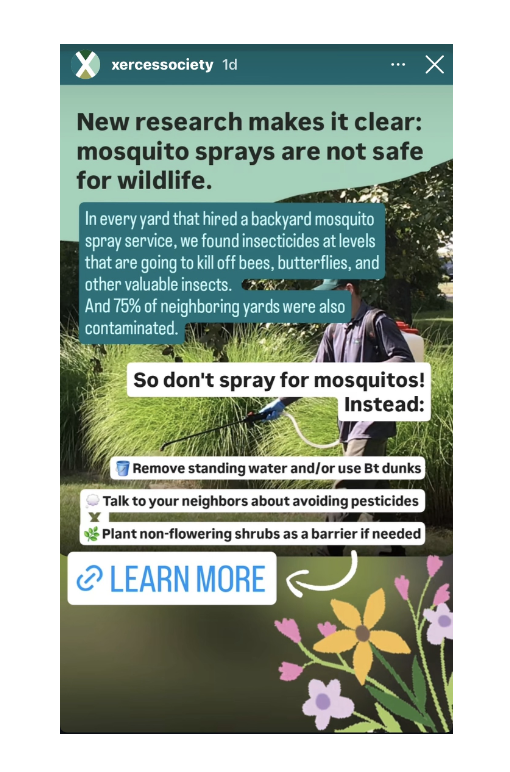
Information: on January 8, the Xerces Society for Invertebrate Conservation circulated a social media post about their research on mosquito sprays. Their graphic issues a reminder that they have established the toxicity and drift of these sprays, which deposit synthetic chemicals (pyrethroids) at levels up to many times stronger than the lethal dose for a bee. This number comes from their webinar last spring in which they discussed this research, condensed in this post and linked on our website, also here. This research study included three communities across the US, including Decatur, GA, where we are located, thanks for the tireless efforts of our local Bee City USA — Decatur, GA (Beecatur) and its chairperson, who is on the BB team. Here were the takeaways from their webinar for me: 1) sprayed/fogged pyrethroids are toxic to pollinators, not just when they are applied but as they linger 2) these chemicals more often than not drift into neighboring yards and 3) fences exacerbate the drift — the fog hits hard surfaces and rises, thus the recommendation for shrubs as barriers (yet, affecting pollinators on these strategic plants). Also, other research shows that sprays only eliminate about 10% of flying adult mosquitos at the time of application. If you are spraying, you are paying a lot of money to poison your yard; you are not controlling mosquitoes.
Here is a link to the media release on the recent publication of this research.
I was heartened to see that the Xerces Society’s first recommendation includes using Bt dunks, which is what we are putting in our buckets (all other companies I have found in the Atlanta area are using pyrethroids in their buckets; if anyone is an exception to that experience, I would like to be corrected — and would welcome the information).
Activity: As I was out about about on Friday, I saw evidence of mosquito companies spraying in my area, both trucks circulating on area streets and yard signs warning of pesticide applications. While I know that climate change is creating milder winters, I do not believe that we have the constellation of factors (multiple days about 50 degrees, standing water from rainfall, longer days with more sunlight) to cause mosquitoes to emerge from their diapause, their winter hibernation. Yes, mosquito eggs are still present in our environment and will start to develop with higher temperatures, but they take days 7-10 to complete a lifecycle. It seems overkill (pun intended) to be spraying in January. And yet I know that these companies want to sign customers for the season. Please read on.
Alternative: Please don’t fall for claims by mosquito spraying companies that what they’re applying is in any way ecologically (or otherwise) safe. Research confirms that mosquito spraying kills almost all pollinators in a yard, including native bees and butterflies. Mosquito spraying harms bird populations already in decline because just about every bird needs insects to feed their babies. The organic sprays offer non-toxic solutions, and also repel pollinators. Bucket systems, which spread control across but not onto a yard, are more effective, more economical, and much safer solutions. If you have contracted with mosquito abatement companies in the past, please talk to us before you sign on this year (and read our reviews on our homepage).
I am offering free consultations with anyone interested, booking through our website or via email. Thank you to those who have already talked to me this year. I have lots of energy to spread lots of buckets. We helped place about 1000 buckets in Atlanta last year. If you are in Decatur and want to check out our buckets, the Bee-autiful Buckets and our signs, below, are at the Wylde Center’s Market (open 9-5 weekdays at 435 Oakview Road); I am adding festivals, talks, workshops to our EVENTS calendar as we commit to them. Please reach/come out and connect. And special thanks to Laura @nurture.native.nature for your ongoing education, advocacy, and support; together we can make changes to Atlanta one yard at a time.
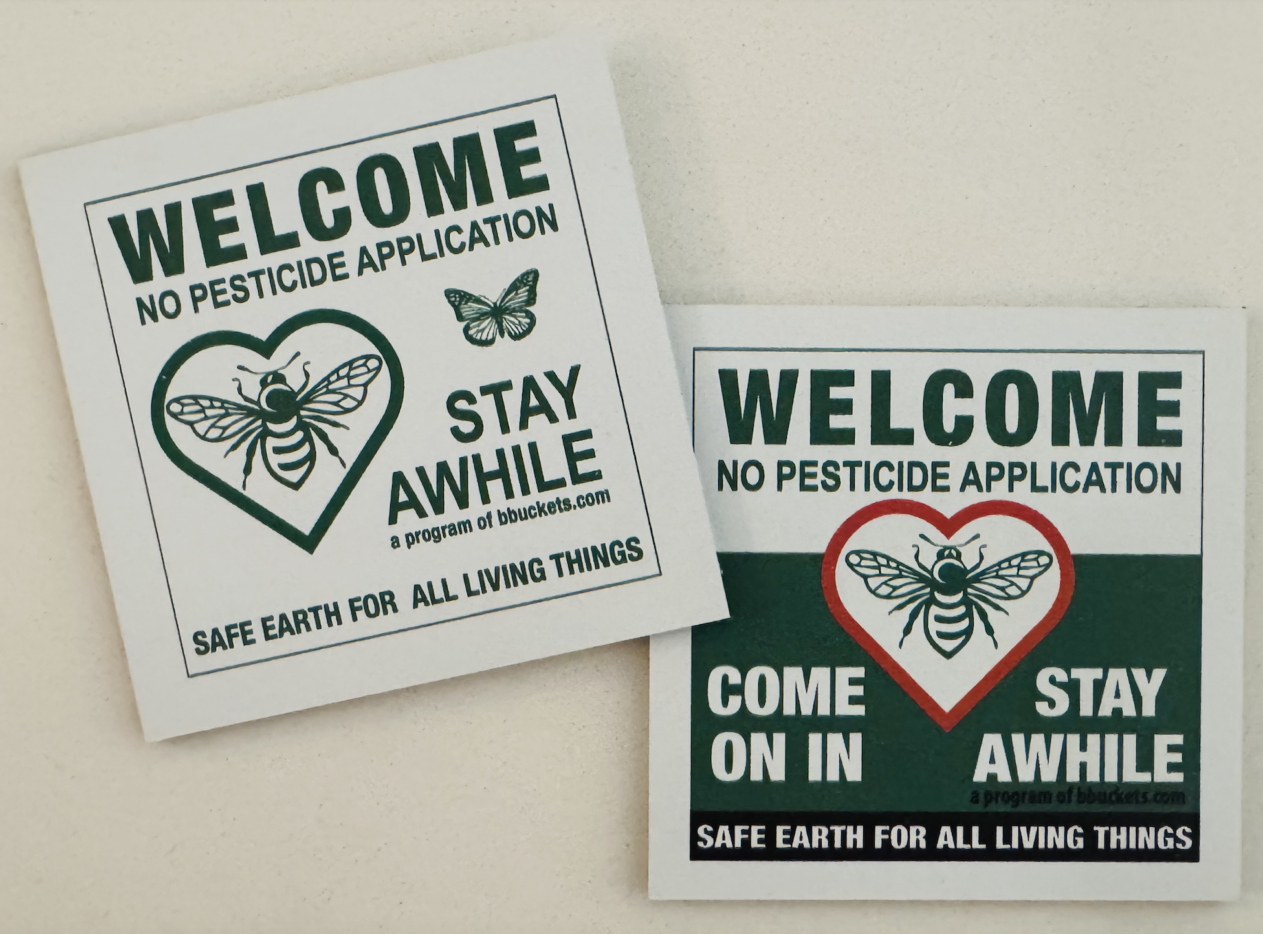
BBuckets’ WELCOME signs, both paper and aluminum, seek to counteract the messages and missions of the CAUTION signs left after yard applications, whether of mosquito fogging pesticides or pre-emergent herbicides, both of which kill beneficial insects and disrupt food chains and lifecycles
Leave a Reply